

Chess is centuries old, and this is revered as a game of timeless wit and strategic brilliance, marking intellectual excellence. a simple game of war into a complex, globally celebrated mind sport. In this development, historical and timeline
history of chess, evolution, origin, ancient game, how to started, development, historical timeline
The Ancient Origins
The earliest form of chess is believed to have originated in India around the 6th century, where it was known as “Chaturanga”. The name refers to the four divisions of the Indian army: infantry, cavalry, elephants, and chariots—represented by the pawn, knight, bishop, and rook in modern chess.
Chaturanga was played on an 8×8 board and quickly spread to Persia, where it became known as “Shatranj”. The Persians contributed significantly to chess terminology, introducing “check” and “checkmate,” derived from “shah” and “shah mat,” highlighting the king’s plight. These terms still exist in today’s vocabulary.
The Islamic World

“After the Islamic conquest of Persia, was spread throughout the Muslim world, including North Africa and Spain.” The game became incredibly popular among scholars and rulers, often viewed as a reflection of wisdom and leadership.
During this period, chess rules remained largely the same, though pieces and boards began to evolve in style. Chess sets avoided human figures due to Islamic art restrictions and instead used abstract or geometric shapes
The Rise of European
Chess entered Europe by the 9th to 11th century, primarily through Spain and Italy. By the 15th century, several key changes were made that shaped modern :
- Over time, the queen’s powers expanded dramatically, allowing her to traverse the board in any direction with unparalleled freedom.
- The bishop evolved from a limited-moving piece to a master of diagonals.
- New rules, such as en passant and castling, were added.
- The game became faster and more tactical.
This version, often called “Romantic Chess“, emphasized flashy tactics and quick attacks. Players like Paul Morphy rose to fame with their aggressive, bold styles.
Becomes a Global Game
In the 19th century, chess began to standardize:
- Clubs and tournaments were organized across Europe.
- In 1886, the first official World Chess Championship was held between Wilhelm Steinitz and Johannes Zukertort.
- Time limits were introduced to prevent overly long games.
- Chess notation was standardized, allowing players to study and record games.
“During this era, theory, opening repertoires, and strategic play were developed.”
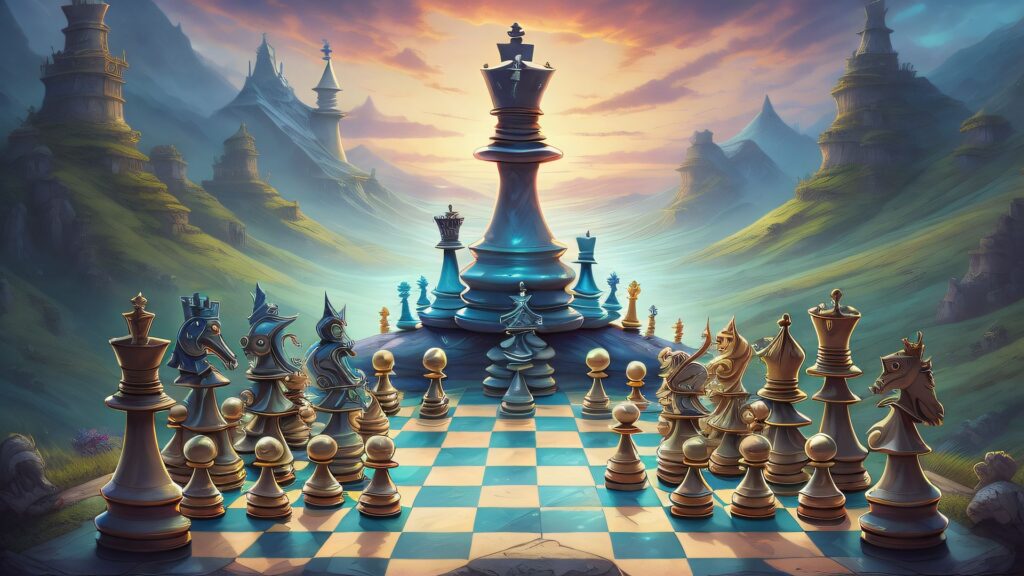
Chess in the 20th and 21st Century
In the 20th century, this gained unprecedented global prominence.
- Legendary matches like Bobby Fischer vs. Boris Spassky in 1972 symbolized Cold War tensions and boosted worldwide interest.
- The Soviet Union dominated chess for decades, training players with scientific and psychological precision.
- In 1997, IBM’s Deep Blue defeated World Champion Garry Kasparov, marking a turning point in the relationship between AI and chess.
In the 21st century, online platforms like Chess.com and Lichess have exploded in popularity, especially after the release of Netflix’s The Queen’s Gambit in 2020.
Today, millions play on their phones, laptops, or over the board in clubs and schools.
A Universal Language
This has become more inclusive, global, and fast-paced than ever:
- Online tournaments allow players to compete across continents.
- Blitz and bullet formats have made the game exciting for a new generation.
- Education is growing in schools as a tool for cognitive development.
- Grandmasters now use AI tools and engines like Stockfish to prepare for games.
From classical 2-hour matches to 60-second speed chess, the game continues to evolve.
Conclusion
The history and evolution of this shows how a simple war strategy game from ancient India transformed into a global intellectual pursuit. From palaces in Persia to smartphones in modern times, it has connected cultures, shaped minds, and inspired millions.
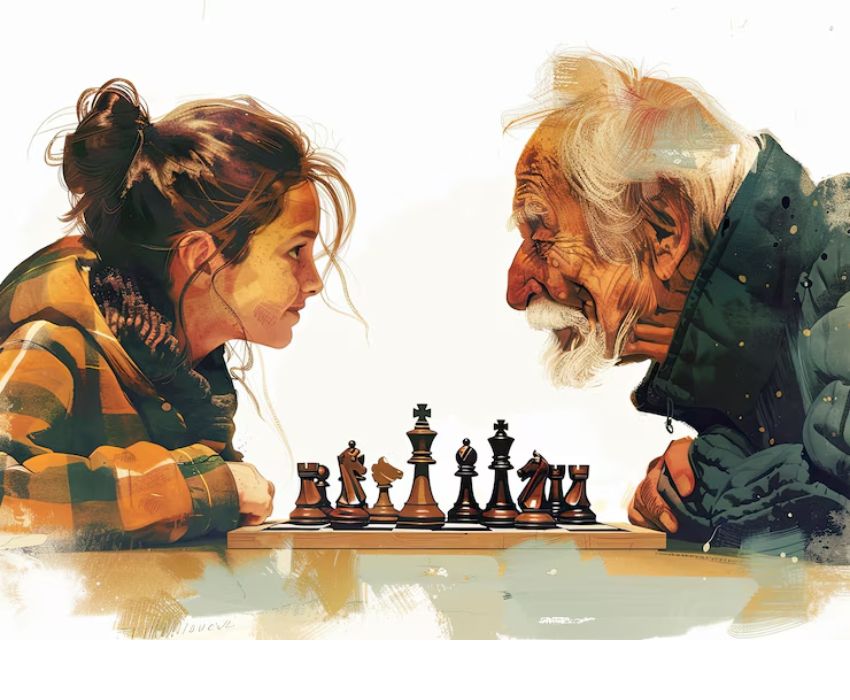
Whether you’re a beginner or a grandmaster, when you sit across a chessboard, you’re participating in a tradition that spans more than 1,500 years.
Rochelle484
https://shorturl.fm/wc5ep
Jesus4474
https://shorturl.fm/bpA9R
Halle2455
https://shorturl.fm/bJGxY
Pierce3964
https://shorturl.fm/fpTA1
Alaina4043
https://shorturl.fm/5sMLd
Bernadette4249
https://shorturl.fm/hNjHX
Savannah1763
https://shorturl.fm/iIndZ
Frederick402
https://shorturl.fm/hEJvj
Beverly2099
https://shorturl.fm/VYkXi
Lana2220
https://shorturl.fm/R06ul
Elias771
https://shorturl.fm/HkiwD
Eli4749
https://shorturl.fm/Yv0Ym
Eugene3080
https://shorturl.fm/RMIj3
Alberto2835
https://shorturl.fm/nOuZk
Agnes1198
https://shorturl.fm/m9yBK
Paige2883
https://shorturl.fm/5GOf8
Lorenzo4044
https://shorturl.fm/bOIca
Robin1298
https://shorturl.fm/1ZnPn
Jason3681
https://shorturl.fm/8L6oj
Jonathan3497
https://shorturl.fm/kiEcY
fg777link
Looking for a solid link? Used fg777link to access my favorite game directly, worked like a charm. Simple and effective. Just click here: fg777link
Beryl4461
Apply now and unlock exclusive affiliate rewards!
Harley2829
Monetize your audience with our high-converting offers—apply today!
Phoebe1381
Monetize your traffic instantly—enroll in our affiliate network!
Hugo3553
Promote our brand and watch your income grow—join today!